
Foodorama
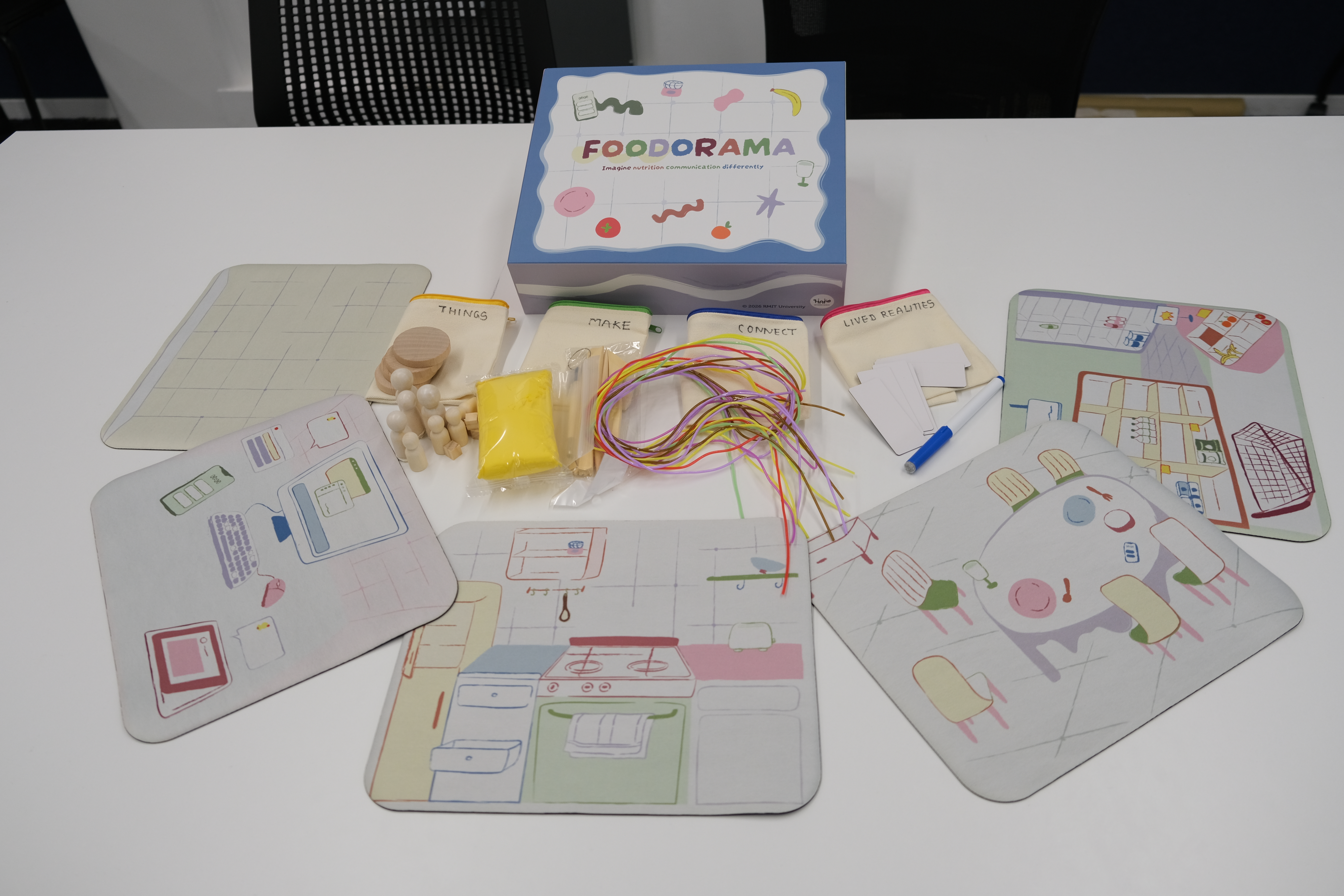
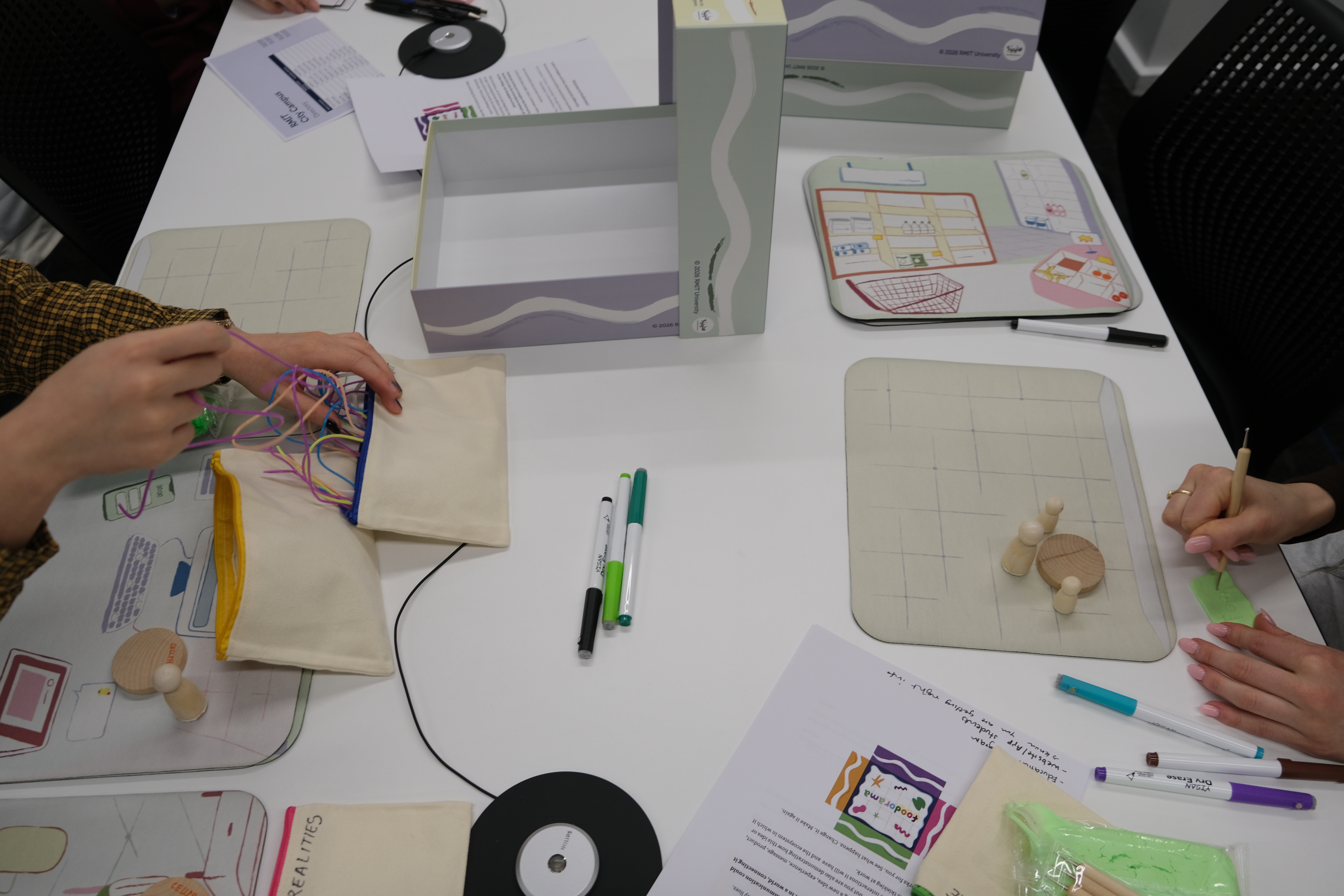
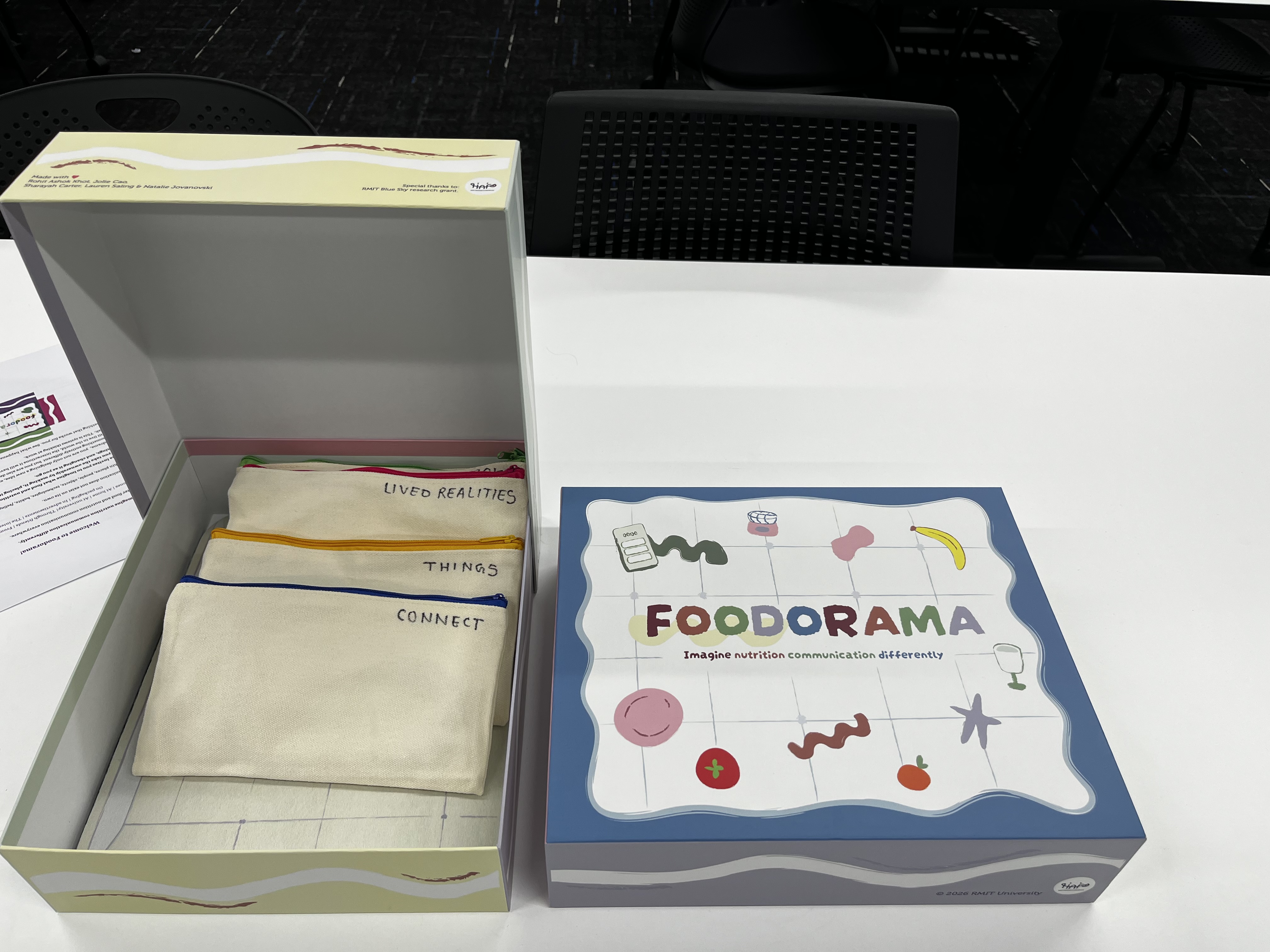
Nutrition communication Toolkit AgencyFoodorama explores how a deliberately designed material environment can make participants' own lived realities, relationships and environments part of the act of designing, not as prompts to answer, but as things to manipulate while making. Foodorama draws from this tradition of playful generative design, but differs in how its structure is organised. Rather than providing a sequence of tasks or a prescribed game objective, Foodorama provides worlds, materials and actions that participants can enter and revisit throughout making. The kitchen, dining table, digital environment, shopping environment and open world establish different situations in which a design can be explored, while the physical materials enable participants to add, connect, rearrange and transform elements.
Made with by Rohit Ashok Khot, Jolie Cao, Sharayah Carter, Lauren Saling & Natalie Jovanovski
Ideation
Duration: 2 monthsDesign
Duration: 3 monthsField Study
Duration: 6 monthsProvocative.
We approached Foodorama as a research product rather than a conventional workshop prototype. Following Odom et al.'s framing, the toolkit was developed as an inquiry-driven artefact intended to be encountered as a coherent and finished product rather than as an assemblage of research materials. This orientation influenced not only its visual and material finish but also the independence of its components, allowing participants to engage with the toolkit through their own combinations of worlds, materials and actions.
Radical.
Rather than asking participants to first articulate an ideal form of food communication and subsequently materialise it, Foodorama places making at the centre of the inquiry. Participants construct an artefact while simultaneously negotiating the circumstances, people, objects and environments through which that artefact might exist. The toolkit is not intended to be used as a reflective questionnaire after a participant has completed a design. Instead, participants encounter reflection through the manipulation of the emerging design. A participant may initially construct an idea on a kitchen mat, introduce a person representing their own circumstances, discover that the idea assumes a particular routine, and then alter the artefact or environment. The reflection is therefore embedded in a cycle of: make → encounter → reconsider → modify → make again.